For decades, the traditional food pyramid shaped how Americans were taught to eat: carbohydrates at the base, fats restricted, and calories prioritized over quality. While well-intentioned, this model failed to account for metabolic health, inflammation, insulin resistance, and the individualized nature of nutrition.
Recently, Robert F. Kennedy Jr.’s updated food pyramid proposal has sparked conversation across healthcare and nutrition communities. Regardless of politics, the direction of this shift matters because it reflects a broader, long-overdue evolution in how we think about food, prevention, and chronic disease.
At R3 Health, we view this moment as another clear signal: healthcare is moving forward.
What’s Different About the New Food Pyramid?
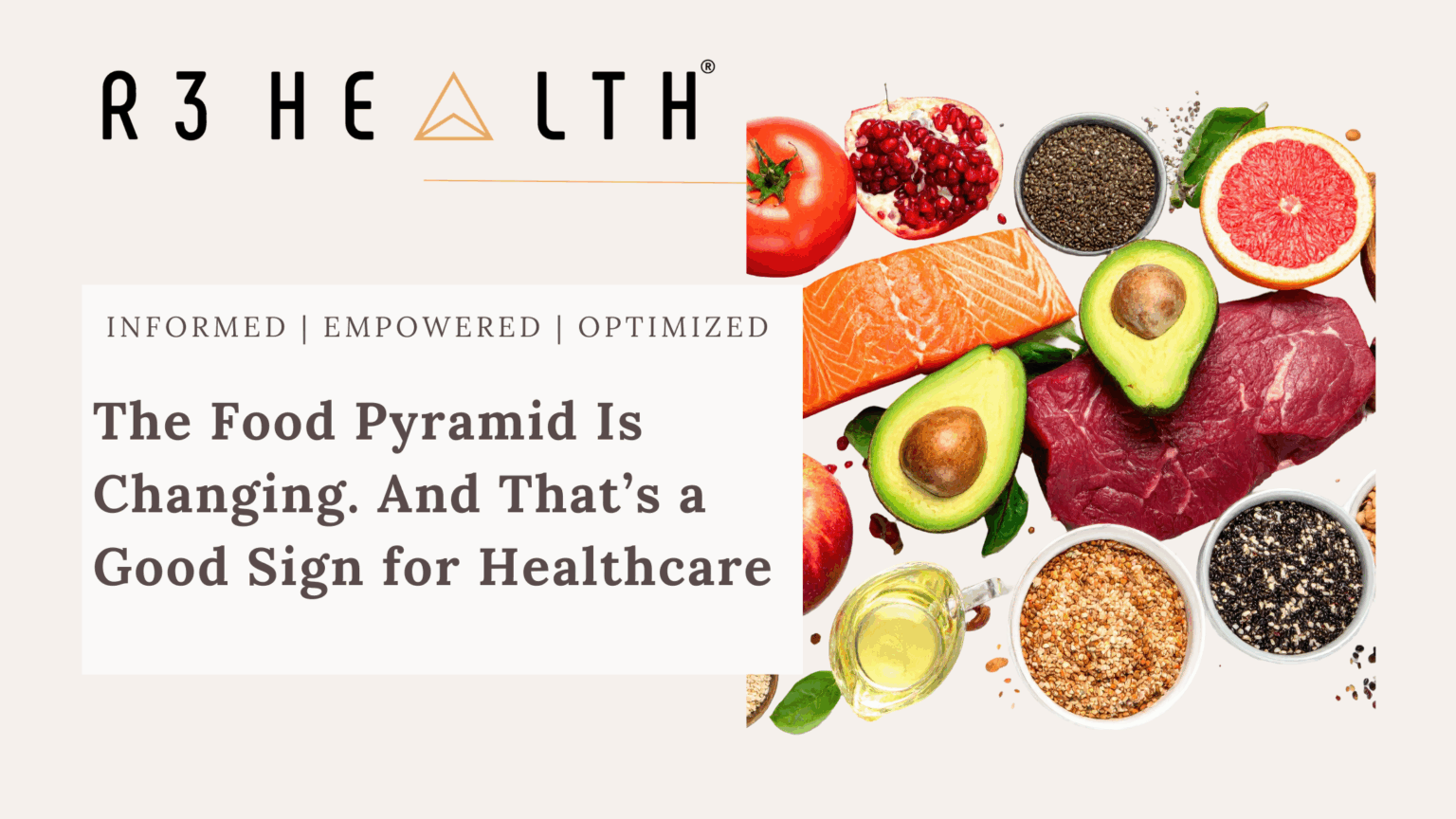
The most notable change is not just what’s included, but what’s deprioritized. Instead of centering nutrition around refined grains and calorie math, the updated framework emphasizes:
- Whole, minimally processed foods
- Adequate protein intake
- Healthy fats
- Blood sugar stability
- Metabolic and inflammatory health
Why the Old Model Fell Short
The traditional pyramid assumed that:
- All calories are equal
- Fat is inherently harmful
- Carbohydrates should form the foundation of every diet
We now know this approach contributed to:
- Rising rates of insulin resistance and type 2 diabetes
- Chronic inflammation
- Cardiovascular disease risk driven by metabolic dysfunction, not fat intake alone
A Win for Preventative & Functional Medicine
This shift aligns closely with functional medicine principles we apply daily at R3 Health:
- Nutrition must support metabolic flexibility
- Protein is essential for longevity, hormone balance, and muscle preservation
- Healthy fats are critical for brain, hormone, and cellular health
- Ultra-processed foods drive inflammation and disease risk
Rather than reacting to disease after it develops, this model supports prevention, resilience, and long-term health optimization.
A Bigger Signal: Healthcare Is Reorienting Toward Root Causes
The importance of this moment goes beyond a graphic or guideline. It reflects a cultural and clinical pivot toward:
- Treating root causes, not symptoms
- Recognizing lifestyle as a primary driver of chronic disease
- Empowering patients with better information
- Valuing outcomes over volume
This is the same philosophy driving the rise of advanced diagnostics, personalized care plans, and data-driven wellness, all foundational to the R3 Health approach.
What This Means for Patients
While no single food pyramid applies to everyone, the direction is encouraging. It reinforces what many patients already feel intuitively:
- Real food matters
- Quality matters
- Personalization matters
The R3 Health Perspective
At R3 Health, we don’t believe in one-size-fits-all nutrition. We use advanced labs, metabolic data, and individualized assessments to guide dietary recommendations that support energy, longevity, heart health, and disease prevention. This updated food pyramid is not the finish line, but it is another meaningful step toward a smarter, more effective healthcare system.