R3 Health’s Decade of Advocacy for Bioidentical Hormone Therapy
For nearly 10 years, R3 Health and our team of medical providers have championed the safe, evidence-based use of bioidentical hormone therapy. This commitment came from one simple truth we have seen repeatedly in our patients: when hormones are restored with precision and medical oversight, quality of life improves, vitality increases, and long-term health risks often decrease.
Today, we are celebrating a historic moment.
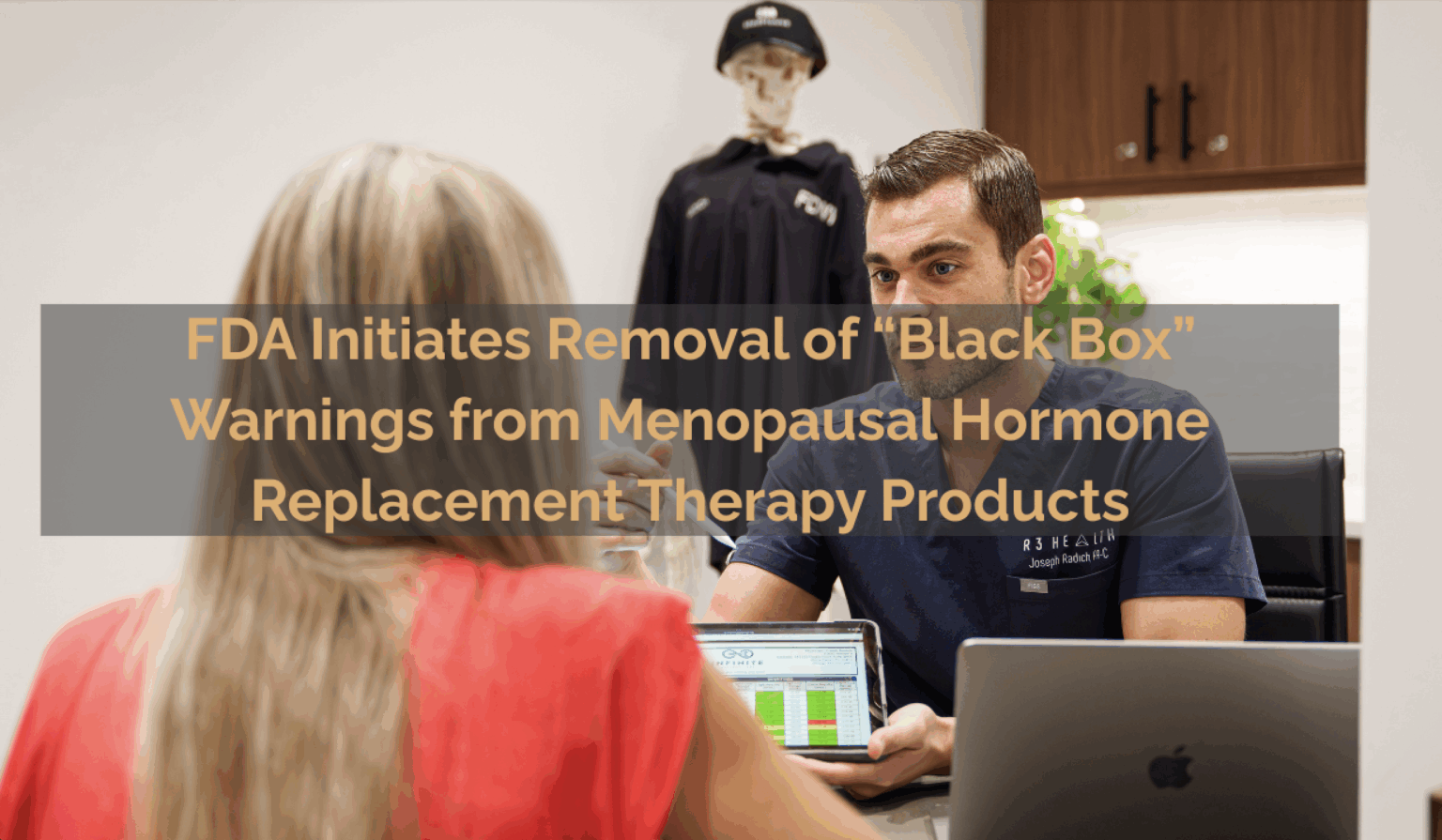
The FDA has rolled back long-standing warning labels on many hormone replacement therapy (HRT) medications used in menopause. This decision follows an extensive review of the scientific literature and acknowledges what functional and integrative clinicians have long understood. Hormone therapy, when used appropriately, is not only effective but can be safe and protective for many patients.
This shift validates a decade of advocacy at R3 Health and reflects a national step toward more informed, patient-centered care.
Why This Change Matters
For years, broad black-box warnings shaped public perception of hormone therapy, creating fear and confusion among patients seeking relief from menopause symptoms or support for long-term health. The recent FDA review recognizes key realities:
- Risks vary depending on age, timing, and the specific hormone used.
- Initiating HRT near the onset of menopause is linked to improved outcomes, not higher risks.
- Today’s formulations, dosing strategies, and delivery methods are significantly safer and more personalized compared to those used in the early 2000s.
This regulatory correction opens the door for more women to access treatment options that support their metabolism, cardiovascular health, cognitive function, bone density, skin quality, and emotional well-being.
R3 Health: A Decade Ahead of the Curve
Long before policy caught up, our medical team at R3 Health recognized the power of precise, bioidentical hormone restoration. We built our hormone programs around:
- Functional lab testing paired with symptom-based assessment
- Bioidentical formulations that match human physiology
- Precision dosing and ongoing monitoring
- Integrative support including nutrition, stress optimization, gut health, and regenerative therapies
Our philosophy is simple: hormones are not about vanity or shortcuts. They are about restoring physiology so the body can function, heal, and age with resilience.
Seeing national regulatory bodies move toward a more accurate, science-driven stance is deeply encouraging and it signals better care for millions of women nationwide.
What the Research Shows: Safety & Efficacy
A large body of peer-reviewed research supports the thoughtful use of hormone therapy, especially when started near the transition into menopause.
1. Cardiovascular Protection
Studies show that when HRT is initiated before age 60 or within 10 years of menopause, women may experience:
- Lower all-cause mortality
- Reduced cardiovascular disease events
- Better metabolic and vascular outcomes
These findings align with the “timing hypothesis,” which highlights the importance of early intervention.
2. Bone Density & Fracture Prevention
Hormone therapy is one of the most effective treatments for preventing bone loss and reducing osteoporotic fracture risk, especially when started early.
3. Cognitive & Emotional Health
Although research is ongoing, several studies suggest potential reductions in dementia risk, improved mood stability, and better overall cognitive performance in appropriately selected patients.
A Better Future for Patients
This FDA decision marks a turning point. It corrects outdated messaging and reflects a more nuanced, evidence-driven approach to women’s health.
For our patients, and for women everywhere, this represents greater access, better education, and more options. And for R3 Health, it reinforces everything we have stood for since the beginning: empowering individuals with modern, science-forward, precision medicine.
We could not be more excited to see these changes unfold and to support our community through informed, compassionate, and innovative care.
References
Cho, L., Abdalla, M., Billups, K. L., Brownley, K. A., & El Khoudary, S. R. (2023). Rethinking menopausal hormone therapy: For whom, when, and how. Circulation, 147(17), 1291–1306.
Hodis, H. N., Collins, P., Mack, W. J., & Shifren, J. L. (2022). Menopausal hormone replacement therapy and cardiovascular disease: The role of formulation, dose, and route of delivery. Journal of Cardiovascular Pharmacology and Therapeutics, 27(3), 241–253.
U.S. Department of Health and Human Services, Food and Drug Administration. (2025). HHS advances women’s health and removes misleading FDA warnings for hormone replacement therapy.
Women’s Health Initiative Study Group. (2013). Estrogen plus progestin and the risk of cardiovascular disease. The New England Journal of Medicine, 349(6), 523–534.